Our Services
Flexible & Scalable Services
We work with homeowners, municipalities, land trusts, utilities, and organizations of all sizes. From small private properties to large-scale wildfire prevention projects, we customize our grazing services to meet your specific needs.
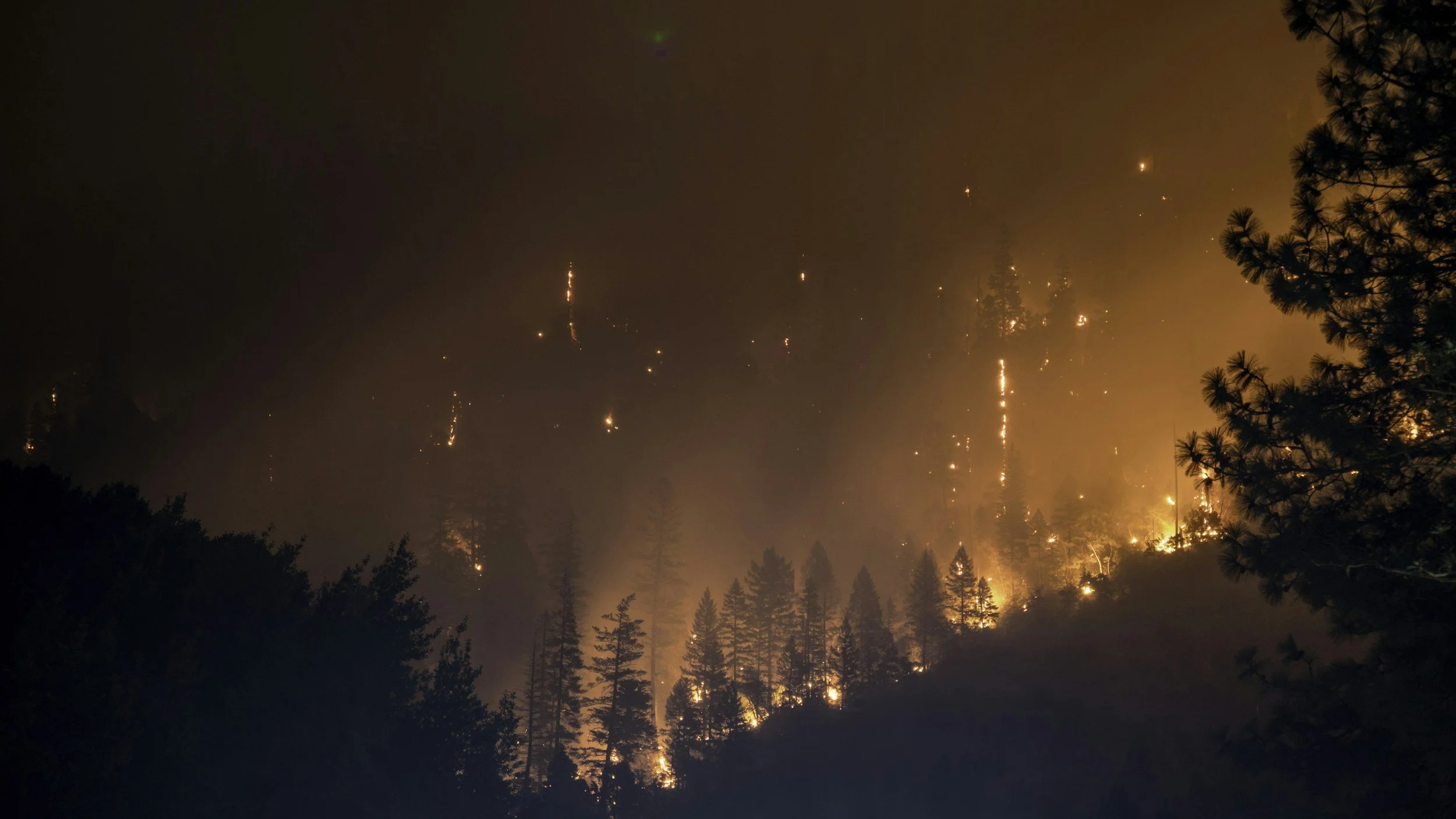
Targeted Grazing for Fire Mitigation
Wildfire risk is strongly influenced by the amount, type, and arrangement of vegetation on a property. Dry grasses, weeds, brush, and shrubs act as fuel, and when that fuel is continuous, fires can spread faster and burn hotter.
Targeted grazing is a land management tool that uses goats and sheep in a planned, controlled way to help reduce this fuel.
How grazing helps with fire mitigation
When properly managed, goats and sheep can:
Reduce fine fuels like dry grasses and weeds that ignite easily
Lower ladder fuels (vegetation that allows fire to move from the ground into shrubs and trees)
Decrease overall vegetation density in targeted areas
Maintain treated areas as part of an ongoing fuel management plan
Work in steep, rocky, or restricted terrain where machinery is unsafe or impractical
This type of vegetation management is commonly used by municipalities, utilities, and land managers as part of a broader wildfire prevention and fuel-reduction strategy.
Important to know
Targeted grazing does not eliminate wildfire risk and it is not a stand-alone solution. Weather, terrain, and other factors still play a major role in fire behavior. However, reducing available fuel is one of the most effective ways to influence how a fire starts, spreads, and behaves.
Grazing works best when it is:
Planned for the right season and growth stage of plants
Applied at the right stocking density and duration
Used as part of a long-term vegetation management approach, not a one-time treatment
Why many land managers choose grazing
Compared to mechanical or chemical methods, targeted grazing offers:
No herbicides or chemical residues
No soil compaction from heavy equipment
Access to difficult or sensitive terrain
A lower-impact way to manage vegetation
A tool that can be repeated seasonally to help maintain fuel reduction
How We Goat This LLC approaches fire mitigation
We don’t just “drop off goats.” We look at:
Vegetation type and density
Terrain and access
Property goals (defensible space, fuel breaks, maintenance, etc.)
Timing and scale of treatment
Then we design a site-specific grazing plan to support your fire mitigation goals and overall land management strategy.
If you’re looking to reduce flammable vegetation and maintain safer conditions around your property, let’s talk about a grazing plan that fits your land.
Working with Nature, Not Against It
When you choose targeted grazing, you’re not just protecting property and communities from wildfire — you’re investing in healthier land. Our goats and sheep recycle nutrients back into the soil as they graze, leaving the land more resilient, balanced, and beautiful.
Vegetation & Land Management
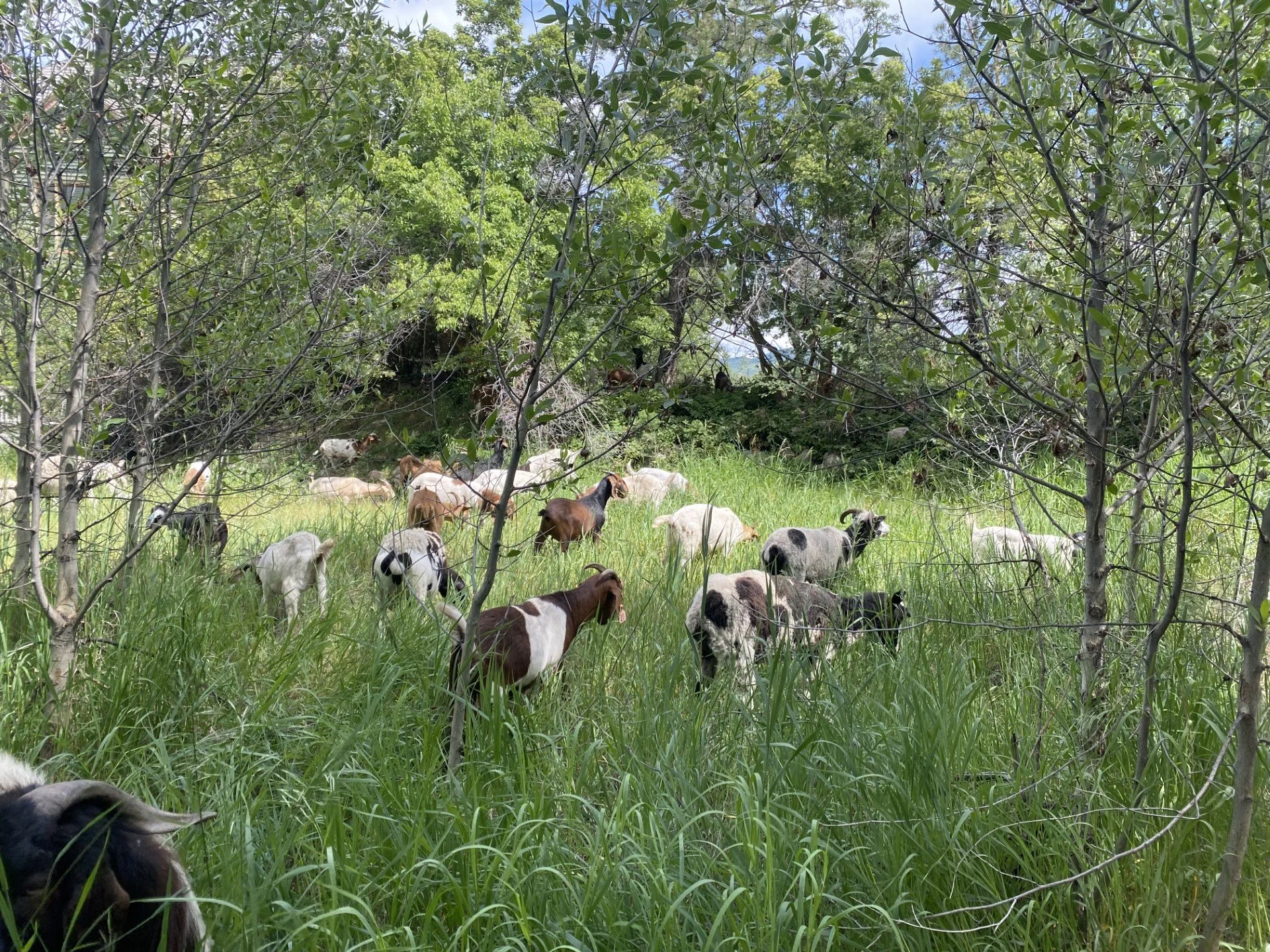
Whether it’s clearing invasive species, maintaining pastures, or restoring native landscapes, our herds work efficiently on terrain that’s too steep, rocky, or difficult for machines. Unlike heavy equipment, grazing is low-impact, sustainable, and beneficial for soil health.
How Goats and Sheep Manage Vegetation & Land
Targeting Invasive Plants
Goats are natural browsers — they prefer leaves, vines, and brush over grass. This makes them excellent at controlling invasive species such as blackberry, poison oak, thistle, and other unwanted plants that choke out native vegetation. By repeatedly grazing these plants, goats weaken root systems and reduce regrowth over time.
Maintaining Healthy Grasslands
Sheep are grazers — they feed primarily on grasses and ground-level plants. Their steady grazing keeps grasslands trimmed to a healthy height, preventing overgrowth that can fuel wildfires while supporting the regrowth of beneficial forage and native grasses.
Natural Soil Improvement
As they graze, goats and sheep fertilize the land with their manure, returning nutrients directly back into the soil. Their hooves gently aerate the ground, improving water absorption and helping seeds establish more easily. The result is healthier, more resilient soil without the need for machinery or chemicals.
Managing Hard-to-Reach Areas
Unlike tractors or mowers, goats and sheep can navigate steep hillsides, rocky outcrops, and dense brush. They go where machines can’t, clearing vegetation in challenging landscapes while leaving minimal impact on the environment.
Sustainable Land Care
Traditional vegetation management often relies on herbicides or heavy equipment, which can harm ecosystems and soil health. Livestock grazing, by contrast, is renewable, low-impact, and beneficial to biodiversity. Over time, it restores balance to the land by reducing invasive species, encouraging native growth, and creating healthier habitats for wildlife.
Environmentally Friendly Solutions
Using livestock for land management reduces reliance on chemicals, fuels, and machinery. Our goats and sheep not only control unwanted vegetation but also fertilize the land naturally, promoting healthier ecosystems over time.
Why Grazing is an Environmentally Friendly Solution
No Chemicals, No Pollution
Unlike herbicides, which can leave harmful residues in the soil and water, grazing uses the natural appetite of goats and sheep to control unwanted vegetation. This means no chemicals, no runoff, and no risk to pets, people, or wildlife.
Low-Carbon Land Management
Heavy machinery like mowers, tractors, and chainsaws burn fuel and release greenhouse gases. Goats and sheep, on the other hand, run on plants. By replacing machines with animals, we dramatically reduce the carbon footprint of land management.
Soil Health & Regeneration
Every graze nourishes the land. As goats and sheep move, their manure fertilizes the soil naturally, adding organic matter that improves fertility. Their hooves also gently till and aerate the ground, boosting water retention and encouraging seeds to sprout.
Supporting Biodiversity
By targeting invasive plants, goats and sheep make space for native vegetation to return. This, in turn, creates healthier habitats for pollinators, birds, and other wildlife. Over time, grazing helps restore balance to ecosystems and strengthens biodiversity.
Zero Waste, All Natural
Machines leave behind emissions and clippings, while chemical treatments leave residues. Our animals leave only healthier soil, trimmed vegetation, and a landscape that’s safer, cleaner, and more sustainable.
Working in Harmony with Nature
Instead of fighting the land, grazing works with it. Our goats and sheep provide the same results as machines or herbicides — but in a way that’s natural, regenerative, and aligned with the long-term health of the environment.